20 October 2026
What a first day on a virtual production stage is actually like
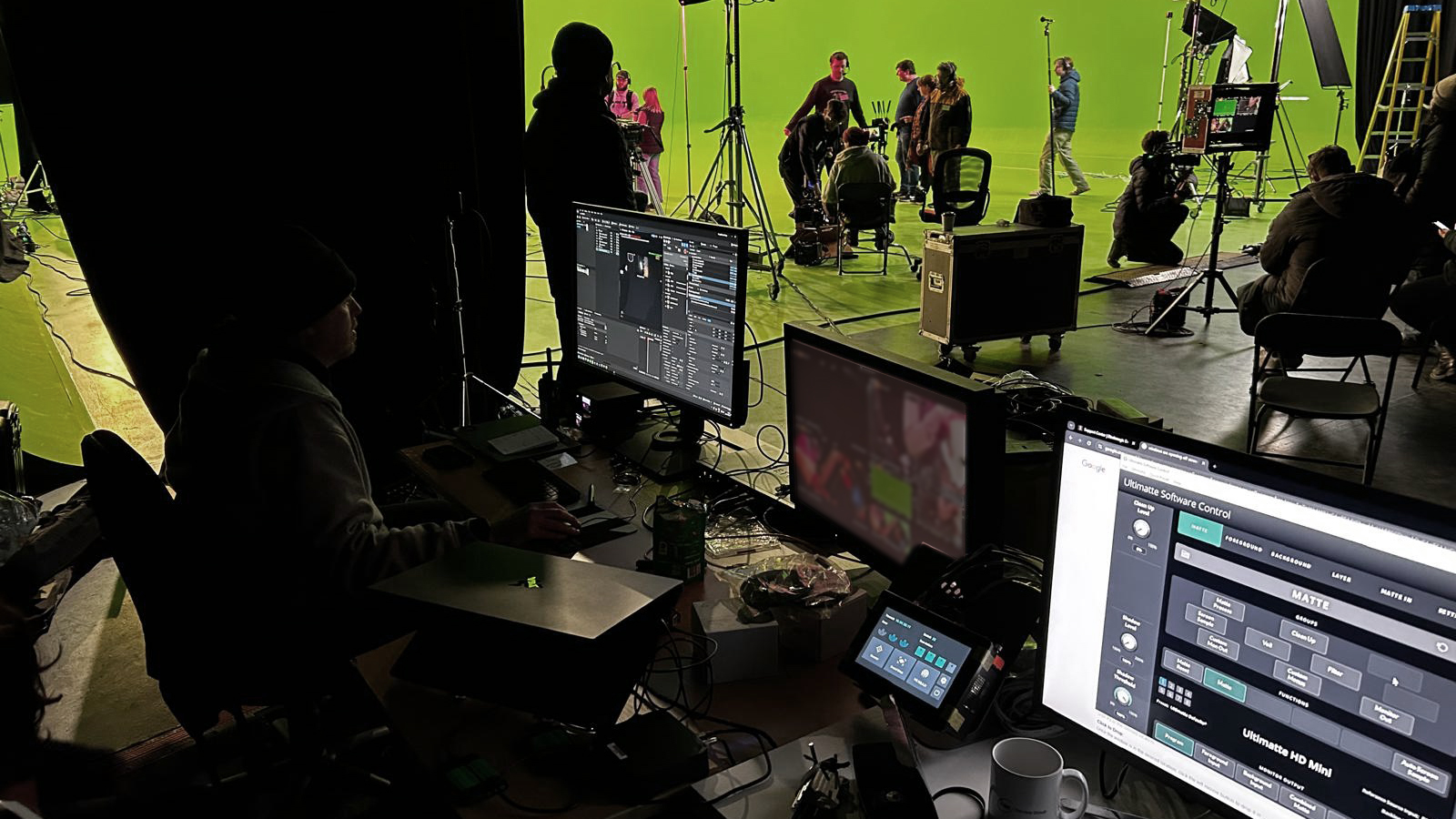
When we ran VEDRI’s first shoot at Aria Studios, around eight in ten of the crew had never worked on a virtual production stage. By the end of the day everyone was confident. If you are about to do your first one, this is what to expect.
The morning is calibration
Nothing creative happens in the first hour. The camera tracking has to know exactly where the lens is, the keyer has to be tuned to the green screen and the lights, and the virtual environment has to line up with the real floor. On our shoot that meant stYpe tracking and a Blackmagic Ultimatte keyer. Expect tweaks, sync adjustments and a few false starts. That is normal, and it is the part first-timers find most unnerving because it looks like nothing is working. It is working. It is being measured.
Then the monitor becomes the set
Once the pipeline is up, the monitor shows the final frame: actor, environment, lighting, all composited live. This is the moment people understand why virtual production is different. The director does not have to imagine the background. The cinematographer can move a virtual sun. The actor can see the world they are standing in. Blocking changes take seconds, because you see the result before you commit.
What goes wrong
Tracking drifts if someone bumps a camera. Green spill shows up on shiny costumes. A real prop casts a shadow the virtual world does not know about. None of these are disasters. They are the same class of problem as a boom in shot, and the crew learns to spot them just as fast.
What to bring
Bring the environment finished and tested, not nearly finished. Bring a shot list that groups set-ups by environment, so the stage is reconfigured as few times as possible. Bring costumes that have been checked against green. And bring one person whose only job is to watch the composite, because everyone else will be watching the actor.
What you go home with
On a conventional shoot you go home with footage and a list of things post has to fix. On this one we went home with finished frames. No post-production on the composite, no waiting to find out whether the shot worked. For a crew that had never done it before, that was the part they talked about in the car park.